Stay informed about the latest developments in skid-mounted PV systems, prefabricated photovoltaic containers, containerized energy solutions, and renewable energy innovations across Africa.
Solar Smart Glass sets the standard in solar control glass. Manual and automatic tuning and variable / dimmable functionality for precise, unrivalled control of solar glare and heat. Made-to-order panels featuring Suspended Particle Device (SPD) film between 2 or more sheets of glass.
It can be manually or automatically “tuned” to precisely control the amount of light, glare and heat passing through a window. Solar Smart Glass sets the standard in solar control glass.
Delivering made-to-order switchable glass solutions for more than 20 years. spaces that adapt to users’ needs at the flick of a switch. Solar control smart glass controls solar glare and reduces the thermal transmittance through a glass façade, directly cutting down on associated HVAC costs.
9.5mm, 11.5mm or 13.5mm, and more available. Less than 10 seconds at room temperature. Whether on or off, our Solar product shields 99.5% of UV light. Driving voltage 110vAC. Power approximately 12 Watt/m sq. Smartglass provided the ideal solution – excellent quality and perfect privacy at the flip of a switch.
Vaal University of Technology, Vanderbijlpark, Sou th Africa. Abstract - This study gives a critical review of flywheel energy storage systems and their feasibility in various applications. Flywheel energy storage systems have gained increased popularity as a method of environmentally friendly energy storage.
Source: Endesa, S.A.U. Another significant project is the installation of a flywheel energy storage system by Red Eléctrica de España (the transmission system operator (TSO) of Spain) in the Mácher 66 kV substation, located in the municipality of Tías on Lanzarote (Canary Islands).
and high power quality such as fast response and voltage stability, the flywheel/kinetic energy storage system (FESS) is gaining attention recently. There is noticeable progress in FESS, especially in utility, large-scale deployment for the electrical grid, and renewable energy applications. This paper gives a review of the recent
A dynamic model of an FESS was presented using flywheel technology to improve the storage capacity of the active power distribution system . To effectively manage the energy stored in a small-capacity FESS, a monitoring unit and short-term advanced wind speed prediction were used . 3.2. High-Quality Uninterruptible Power Supply

In 2017, Solaron became the first Armenian company to begin mass production of photovoltaic solar panels., For this purpose, we have established long-term partnerships with organizations and research centers in the EU and China. Solaron produces solar panels at its own modern production facilities located in Yerevan.
Vertical solar panels, east to west orientation, with bifacial modules near Donaueschingen, Germany. A bifacial solar cell (BSC) is a photovoltaic solar cell that can produce electrical energy from both front and rear side. In contrast, monofacial solar cells produce electrical energy only when photons are incident on their front side.
In contrast, monofacial solar cells produce electrical energy only when photons are incident on their front side. Bifacial solar cells and solar panels (devices that consist of multiple solar cells) can improve the electric energy output and modify the temporal power production profile compared with their monofacial counterparts.
By 2020, the ENF Solar directory of solar companies lists 184 producers of bifacial solar panels, and according to the International Technology Roadmap for Photovoltaics, they held a 20% share of the overall PV market and its forecast is that this share will rise to 70% by 2030.

Vertical solar panels, east to west orientation, with bifacial modules near Donaueschingen, Germany. A bifacial solar cell (BSC) is a photovoltaic solar cell that can produce electrical energy from both front and rear side. In contrast, monofacial solar cells produce electrical energy only when photons are incident on their front side.
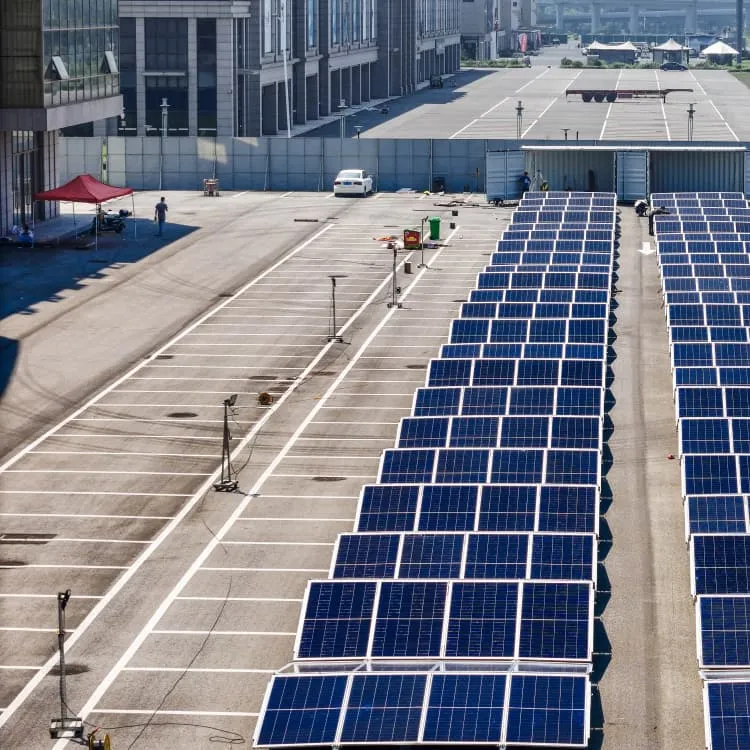
Traditional solar panels, known as monofacial panels, only use one side of the module for this process. The light that isn’t absorbed by the panel is reflected away. Bifacial solar panels are different. These types of panels have solar cells on both sides, enabling them to absorb light from the front and the back.
The technology behind solar panels continues to evolve and improve. Manufacturers are now able to produce bifacial panels, which feature energy-producing solar cells on both sides of the panel. With two faces capable of absorbing sunlight, bifacial solar panels can be more efficient than traditional monofacial panels – if used appropriately.
Efficiency of solar cells, defined as the ratio of incident luminous power to generated electrical power under one or several suns (1 sun = 1000W/m 2), is measured independently for the front and rear surfaces for bifacial solar cells.