Stay informed about the latest developments in skid-mounted PV systems, prefabricated photovoltaic containers, containerized energy solutions, and renewable energy innovations across Africa.
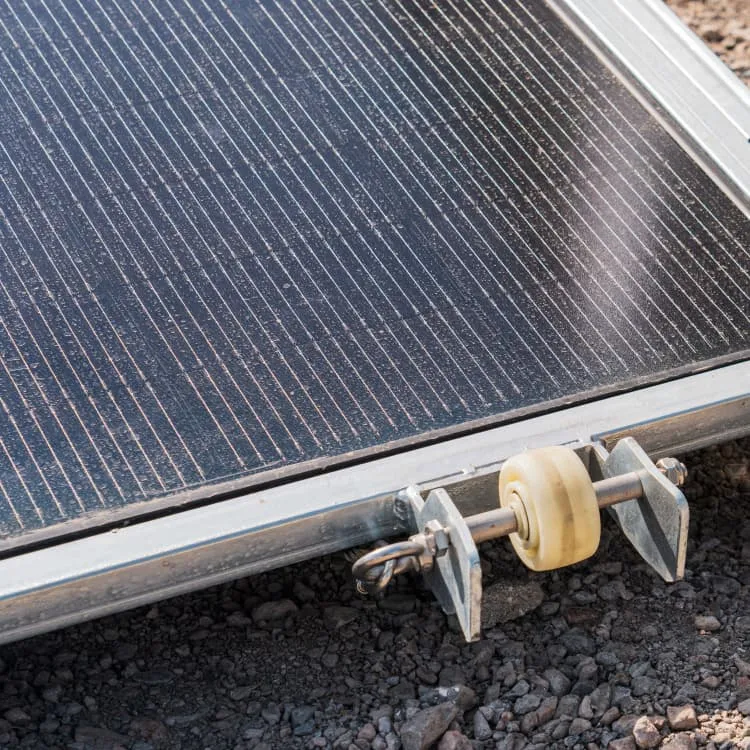
PV array made of cadmium telluride (CdTe) solar panels Cadmium telluride (CdTe) photovoltaics is a photovoltaic (PV) technology based on the use of cadmium telluride in a thin semiconductor layer designed to absorb and convert sunlight into electricity.
Cadmium telluride solar cells are the world’s leading thin-film photovoltaic technology. As of 2023, global installed capacity has surpassed 30 GWp, with about 40% of that capacity located in the United States. Their architecture can be simplified into several stacked layers, from bottom to top:
SETO released the Cadmium Telluride PV Perspective Paper in January 2025, outlining the state of CdTe PV technology and SETO’s priorities to reduce costs, address materials availability, and support the scale-up of CdTe within the domestic utility-scale PV market. A large-scale solar array in Colorado with CdTe modules.
Cadmium telluride photovoltaic cells have negative impacts on both workers and the ecosystem. When inhaled or ingested the materials of CdTe cells are considered to be both toxic and carcinogenic by the US Occupational Safety and Health Administration.

Given the significant increase in electricity consumption in 5G networks, which contradicts the concept of communication operators building green communication networks, the current research focus on 5G base stations is mainly on energy-saving measures and their integration with optimized power grid operation.
The 5G communication base station can be regarded as a power consumption system that integrates communication, power, and temperature coupling, which is composed of three major pieces of equipment: the communication system, energy storage system, and temperature control system.
This model encompasses numerous energy-consuming 5G base stations (gNBs) and their backup energy storage systems (BESSs) in a virtual power plant to provide power support and obtain economic incentives, and develop virtual power plant management functions within the 5G core network to minimize control costs.
The 5G network is the wireless terminal data; it first sends a signal to the wireless base station side, then sends via the base station to the core network equipment, and is ultimately sent to the destination receiving end.