
Stay informed about the latest developments in skid-mounted PV systems, prefabricated photovoltaic containers, containerized energy solutions, and renewable energy innovations across Africa.


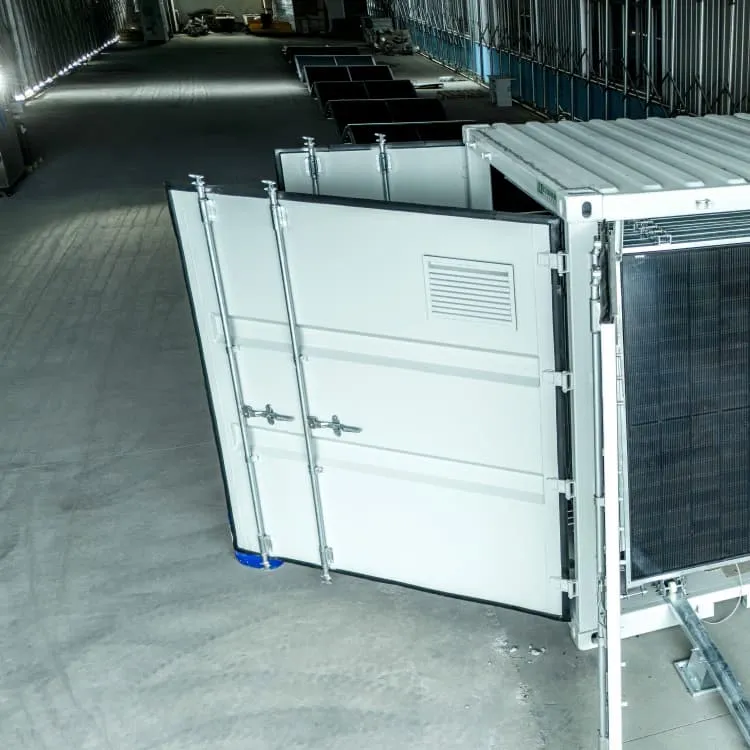
Vanadium Redox Flow Batteries (VRFBs) have emerged as a promising long-duration energy storage solution, offering exceptional recyclability and serving as an environmentally friendly battery alternative in the clean energy transition. VRFBs stand out in the energy storage sector due to their unique design and use of vanadium electrolyte.
The vanadium redox battery (VRB), also known as the vanadium flow battery (VFB) or vanadium redox flow battery (VRFB), is a type of rechargeable flow battery which employs vanadium ions as charge carriers.
Redox flow batteries, including VRFBs, are well-suited for stationary energy storage applications where power output and energy capacity are designed to remain in a fixed ratio. Their operational safety, modular scalability, and high cycle life make them a viable option for such use cases. 8
Traditional redox flow battery chemistries include iron-chromium, vanadium, polysulfide–bromide (Regenesys), and uranium. Redox fuel cells are less common commercially although many have been proposed. Vanadium redox flow batteries are the commercial leaders.

Among the various types of RFBs, vanadium redox flow battery (VRFB) stands out for its ability to eliminate cross-contamination between electrolytes, a common issue in other flow battery chemistries which induces self-discharge of the device.
Vanadium redox flow batteries (VRFBs) hold great promise as a scalable and efficient energy storage solutions for renewable energy systems as compared to its several counterparts.
The UNSW All-Vanadium Redox Flow Battery patents and technology were licensed to Mitsubishi Chemical Corporation and Kashima-Kita Electric Power Corporation in the mid-1990s and subsequently acquired by Sumitomo Electric Industries where extensive field testing was conducted in a wide range of applications in the late 1990s and early 2000s.
Traditionally, much of the global vanadium supply has been used to strengthen metal alloys such as steel. Because this vanadium application is still the leading driver for its production, it’s possible that flow battery suppliers will also have to compete with metal alloy production to secure vanadium supply.

Our solar PV module manufacturing plant's financial model was meticulously modelled to satisfy the client's requirements. It provided a thorough analysis of production costs including capital expenditures, manufacturing processes, raw materials, and operating costs.
According to an IMARC study, the global solar PV module market size reached 1,386.1 TWh in 2024. Looking ahead, the market is expected to grow at a CAGR of approximately 14.36% from 2025 to 2033, reaching a projected capacity of 4,919.2 TWh by 2033. A number of important factors are driving the market for solar PV modules.
The proposed facility is designed with an annual production capacity of 1,000 MW (1 GW) of solar PV module. Manufacturing Process: The first step in the production of solar PV modules is the melting and solidification of high-purity silicon pieces into polycrystalline ingots.
These benchmarks help measure progress toward goals for reducing solar electricity costs and guide SETO research and development programs. Read more to find out how these cost benchmarks are modeled and download the data and cost modeling program below.
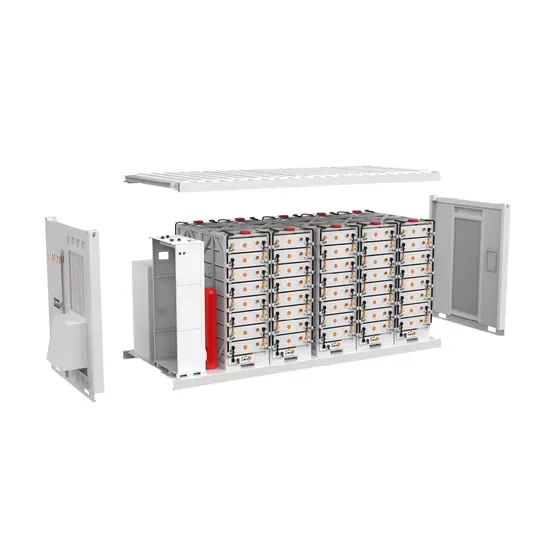
Vaal University of Technology, Vanderbijlpark, Sou th Africa. Abstract - This study gives a critical review of flywheel energy storage systems and their feasibility in various applications. Flywheel energy storage systems have gained increased popularity as a method of environmentally friendly energy storage.
Source: Endesa, S.A.U. Another significant project is the installation of a flywheel energy storage system by Red Eléctrica de España (the transmission system operator (TSO) of Spain) in the Mácher 66 kV substation, located in the municipality of Tías on Lanzarote (Canary Islands).
and high power quality such as fast response and voltage stability, the flywheel/kinetic energy storage system (FESS) is gaining attention recently. There is noticeable progress in FESS, especially in utility, large-scale deployment for the electrical grid, and renewable energy applications. This paper gives a review of the recent
A dynamic model of an FESS was presented using flywheel technology to improve the storage capacity of the active power distribution system . To effectively manage the energy stored in a small-capacity FESS, a monitoring unit and short-term advanced wind speed prediction were used . 3.2. High-Quality Uninterruptible Power Supply






